
Thousands of Canadians may soon receive compensation as part of a growing number of class-action settlements across the country. With more legal cases being resolved involving data breaches, consumer rights, and corporate practices, 2026 is shaping up to be a major year for potential payouts.
Many people don’t realize they qualify for these settlements. In fact, some Canadians may already be eligible for compensation without even knowing it. That’s why staying informed and checking regularly is more important than ever.
What are settlement payments?
Settlement payments are financial compensation given to individuals affected by legal cases, usually resolved without going to trial. In Canada, class-action lawsuits allow large groups of people to come together and file claims against companies or organizations.
These cases often involve situations where consumers were treated unfairly or experienced some form of loss. Instead of going through long court battles, companies may agree to settle and provide compensation to those affected.
Common types include cases related to personal data exposure, misleading advertising, defective products, or unfair business practices.
Why 2026 could be a big year for settlements
Legal activity in Canada has been increasing steadily, and many cases are now reaching their final stages. Several major payouts are already underway: the $10.45 million Scotiabank NSF fee settlement is depositing money automatically into 148,000 accounts, the Silk and Great Value recall settlement is accepting claims until October 16, 2026, and the $59 million Ontario jail lockdown settlement runs until December 1, 2026.
Stronger privacy laws, increased consumer awareness, and stricter regulations have made it easier for people to take legal action — and companies are more likely to settle than fight expensive, years-long court proceedings.
Who may qualify for compensation
Eligibility depends on each specific settlement, but many Canadians qualify under common situations: you purchased a product or service that later became part of a lawsuit, your personal information was exposed in a data breach, or you were affected by misleading business practices.
Some settlements send direct notifications. Many do not — which means people miss out simply because they never heard about the case. Even if you are unsure, it is worth checking: many claims require only basic information and take a few minutes to complete.
How to claim your settlement money
The process is usually simple and does not require legal expertise.
- Identify a settlement you may be eligible for through trusted listings.
- Visit the official claim website — and verify it is legitimate first using our guide on how to check if a settlement is real or fake.
- Fill out the claim form with your name, contact information and claim details. Some cases require documents; many smaller claims accept a signed declaration.
- Submit before the deadline and wait for confirmation and payment processing.
Deadlines are strict. If you miss one, you lose your chance at compensation even if you qualify — claim windows are not extended.
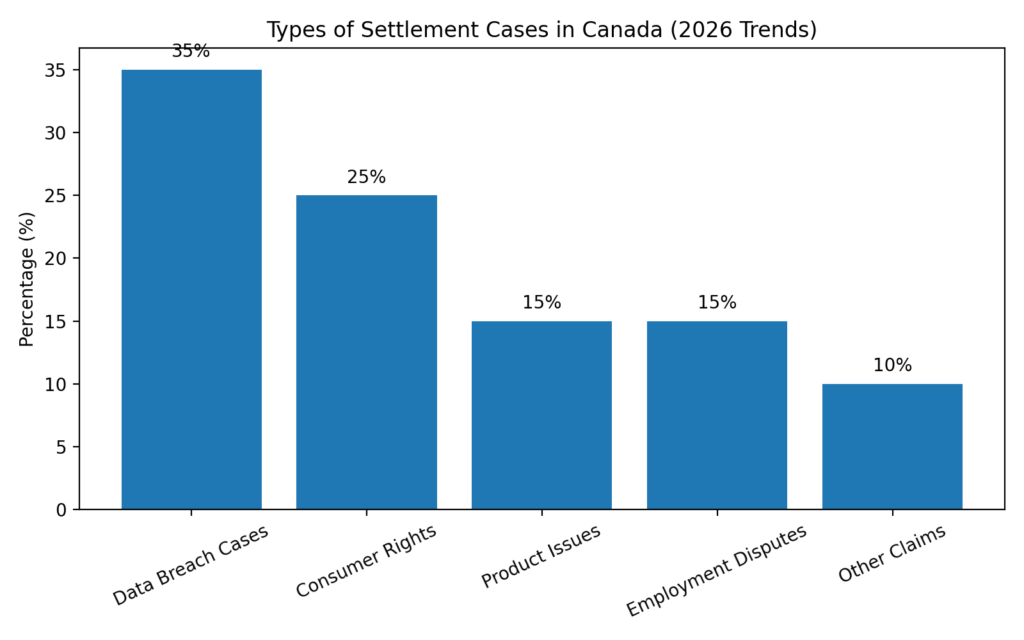
Types of settlement cases Canadians may be eligible for in 2026.
How much money can you expect
Amounts depend on the settlement and how many people apply. Smaller consumer cases often pay $50–$200 — the Scotiabank deposit is about $43. Larger settlements pay hundreds to several thousand dollars, and cases involving serious harm can pay far more: the Silk recall settlement ranges up to $300,000 for the most serious documented claims, and the Ontario lockdown settlement runs from $2,000 to $68,000.
A single claim may be modest, but tracking settlements over time adds up.
Warning: settlement scams are increasing
As more settlements make headlines, scammers get more active. Canadians are already being targeted by fake payout texts — like the fake “milk settlement” scam currently circulating.
Real settlements never pressure you to act immediately, never charge a fee to file, and never ask for banking passwords or your SIN through random messages. Verify every claim through official sources before entering anything.
Where to find legitimate settlements
Check official legal notices, class counsel websites, government announcements, and trusted trackers regularly. SettlementAlerts.ca maintains guides for every major open Canadian settlement, including deadlines, eligibility rules and scam warnings — checking before deadlines pass is the whole game.
Final thoughts
With multiple class-action settlements paying out in 2026, Canadians have a real opportunity to receive compensation they are entitled to. The keys: stay informed, act before deadlines, and verify everything to avoid scams.
If you think you might qualify for any open settlement, take a few minutes to look into it — your next payment could already be waiting.

Tyler Bernick is a content writer covering Canadian settlement updates, scam alerts, and consumer rights. He aims to simplify complex legal topics and provide clear, reliable information to help Canadians make informed decisions.
Discover more from Settlement Alerts
Subscribe to get the latest posts sent to your email.
1 thought on “Canadians May Be Eligible for New Settlement Payments in 2026 — Check If You Qualify”