
By Tyler Bernick — updated October 2026
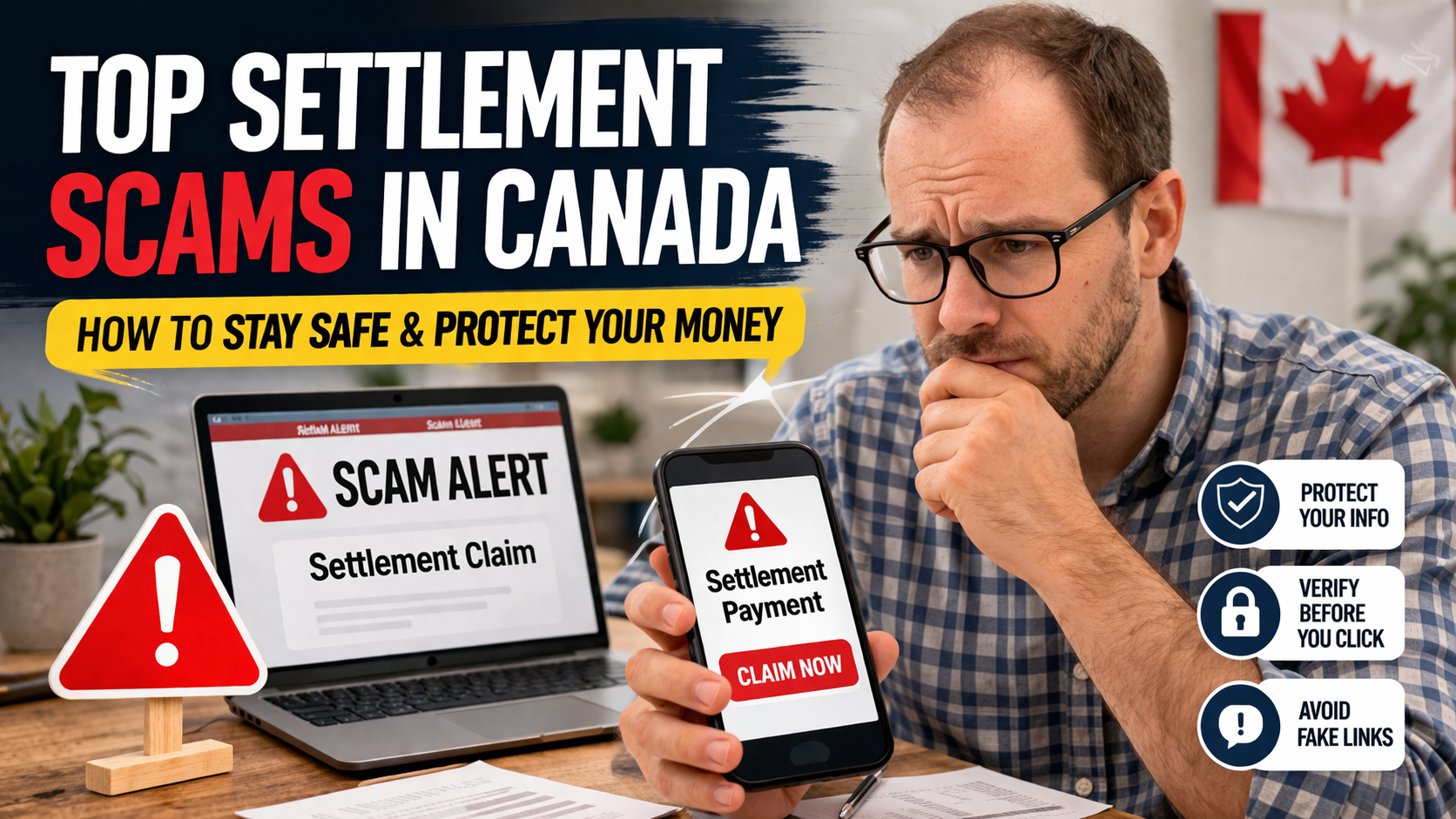
Settlement scams are rapidly becoming one of the most common types of fraud targeting Canadians in 2026. From fake text messages promising compensation to professional-looking websites offering “easy payouts,” scammers are evolving their tactics to appear more legitimate than ever.
Many people fall victim because these scams often look identical to real settlement notifications — and real settlements genuinely are paying Canadians right now, from the Scotiabank NSF fee settlement to the Silk and Great Value recall settlement. Understanding how the fakes work, and how to check any settlement yourself in five minutes, is essential.
Why settlement scams are rising in Canada
Settlement scams exploit something Canadians are already familiar with: class-action lawsuits and government payments. Over the past few years, Canadians have received legitimate payments related to data breaches, consumer overcharges and government rebates. That steady stream of real money creates the perfect cover — one more payout notice doesn’t feel unusual.
The four main scam types at a glance
| Scam type | How it reaches you | What it wants | Best defense |
|---|---|---|---|
| Fake text settlements | SMS with a “claim” link | Banking and identity details | Never tap links in unsolicited texts |
| Email phishing | Emails mimicking law firms | Login credentials, card numbers | Check the sender’s real domain |
| Fake government rebates | Texts/emails posing as CRA or provincial programs | SIN and banking info | CRA never texts payment links |
| Social media settlement ads | Facebook/Instagram ads | Personal info via fake claim forms | Search the settlement independently |
Common types of settlement scams
1. Fake text message settlements
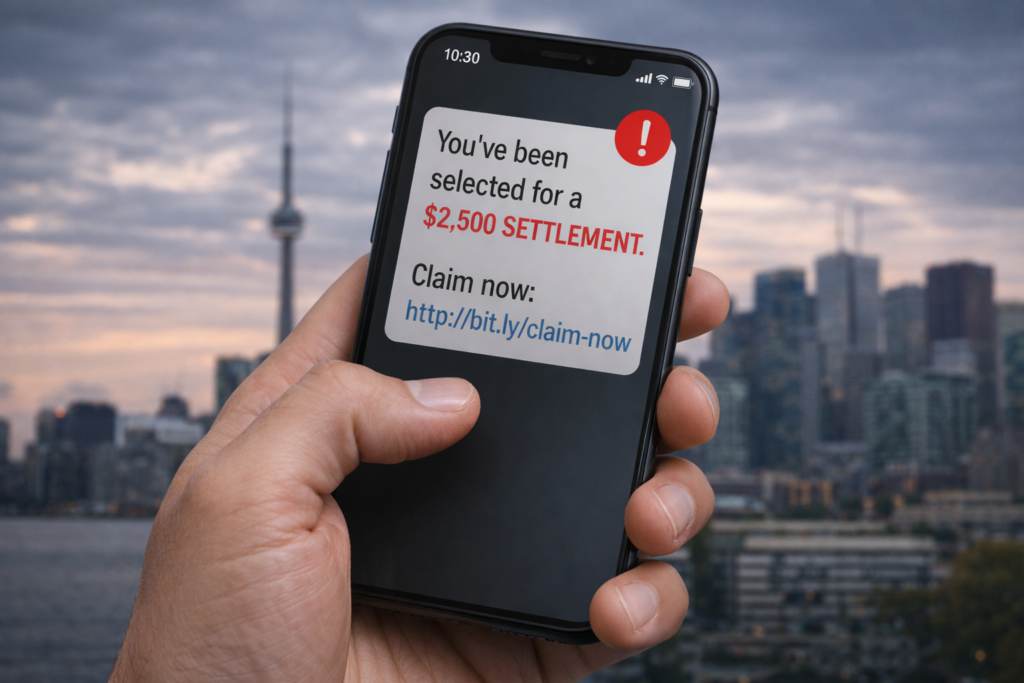
The most common scam today. You receive a message saying you qualify for a settlement — often related to groceries, banking or data breaches. The link leads to a fake website that harvests personal details. The fake “milk settlement” scam currently circulating across Canada is a textbook example.
2. Email phishing scams
Scammers send emails that appear to come from official organizations or law firms, complete with logos, professional language and “Claim Now” buttons. Clicking can lead to credential theft or malware. Always check the actual sending domain, not just the display name.
3. Fake government rebates
Some scams impersonate Canadian government agencies, promising tax refunds, grocery rebates or energy credits. Remember: the CRA does not send e-transfer links or payment texts — refunds arrive through direct deposit you set up yourself in CRA My Account, or by mailed cheque.
4. Social media settlement ads
Ads on platforms like Facebook and Instagram claim you can receive compensation instantly. These lead to convincing but fraudulent claim forms. Legitimate settlement administrators rarely advertise on social media — they notify class members directly or through court-approved notice programs.
Red flags you should never ignore
You didn’t apply for anything
If you never signed up for a settlement and never bought the product in question, be cautious. Legitimate settlements involve prior purchases, accounts or court-ordered notice — not random lotteries.
Urgent language
“Act now,” “final notice,” “expires tonight” — pressure tactics designed to rush you past verification. Real claim windows are published months in advance.
Requests for payment
No real settlement ever asks for processing fees, release charges or verification payments. Filing is always free; class counsel is paid from the settlement fund.
Requests for information a claim never needs
A real claim form asks for your name, contact details, and sometimes proof of purchase or direct-deposit information through a secure portal. It never asks for your SIN by text, your online banking password, or your card PIN. The moment any of those come up, close the page.
Suspicious website links
Fake sites imitate real ones with slightly altered domain names and ask for far more personal information than any claim form needs. Read URLs character by character.
How to check if a settlement is real or fake
Before trusting any settlement message, run it through this five-minute process.
- Search online. Google the settlement name with “Canada.” Real settlements are covered by news outlets and listed by the law firms running them.
- Check official sources. Government websites, class counsel pages and the Canadian Anti-Fraud Centre alerts.
- Verify contact information. Legitimate settlements name an administrator with a working phone line and mailing address. If you cannot find a way to contact anyone directly, treat it as fake.
- Never use the link in the message. Type the administrator’s address into your browser yourself. This one habit defeats nearly every phishing attempt.
Real-life impact of these scams
Many Canadians have reported losing money after trusting fake settlement offers — handing over credit card details, banking information and identity data. In some cases, scammers drained accounts within minutes. The Canadian Anti-Fraud Centre reports Canadians lost over $700 million to fraud in 2025 alone, and most incidents are never reported at all.
What to do if you’ve been targeted
If you receive a suspicious message:
- Do not click any links
- Report the number as junk and delete the message
- Report it to the Canadian Anti-Fraud Centre (1-888-495-8501)
- Monitor your accounts
If you already entered your information: change your passwords immediately, starting with online banking and email, contact your bank to freeze or watch the account, and consider a fraud alert with Equifax and TransUnion.
Final thoughts
Settlement scams in Canada are becoming more sophisticated, but they all share the same goal — tricking you into giving away your information. If something feels suspicious, step back and verify it through official channels. The few minutes that takes is the cheapest insurance there is.
For verified, currently open Canadian settlements and claim deadlines, bookmark SettlementAlerts.ca.

Tyler Bernick is a content writer covering Canadian settlement updates, scam alerts, and consumer rights. He aims to simplify complex legal topics and provide clear, reliable information to help Canadians make informed decisions.
Discover more from Settlement Alerts
Subscribe to get the latest posts sent to your email.