
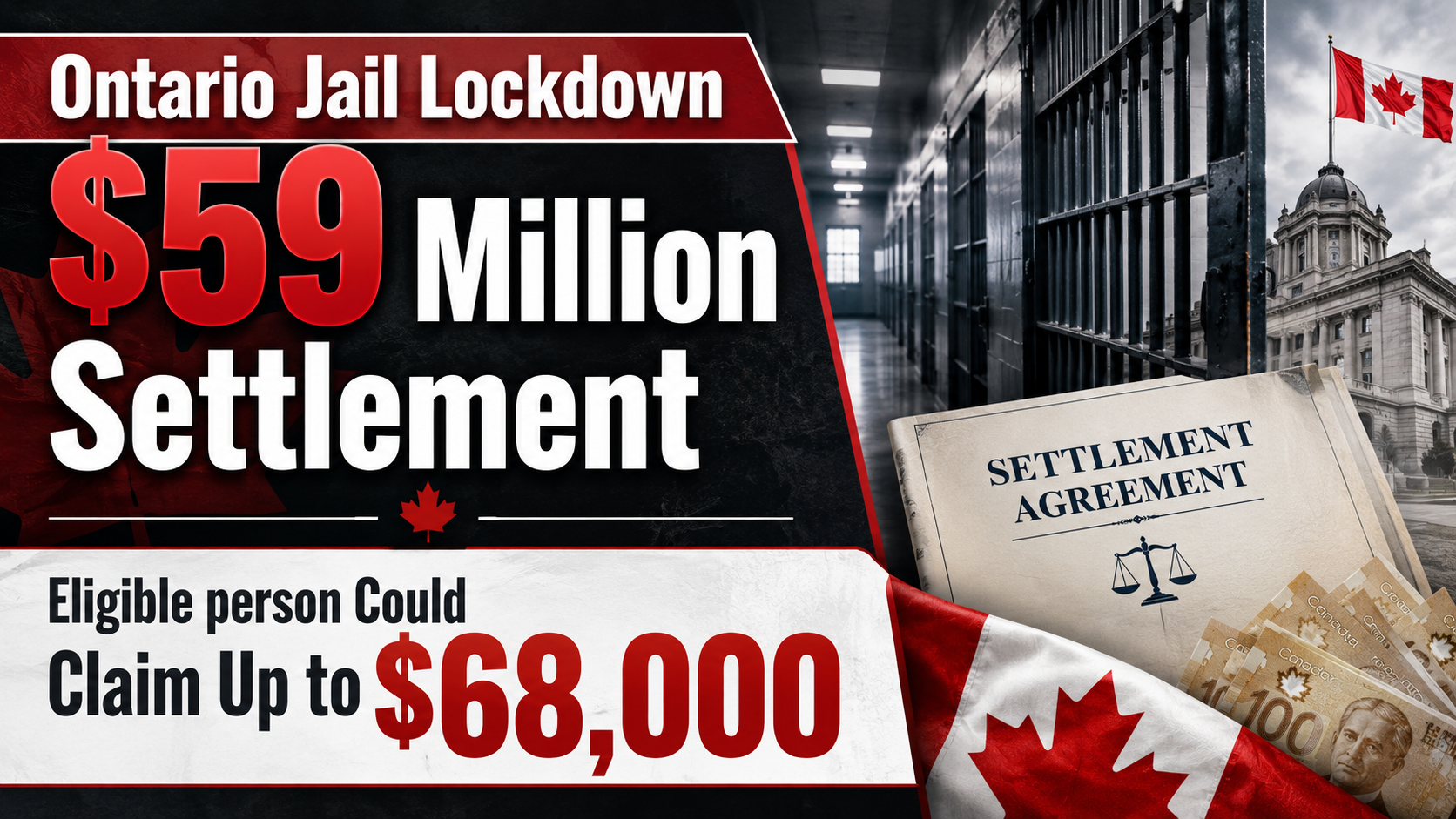
Thousands of people who were held in Ontario correctional institutions may now be eligible to claim money from a major class action settlement involving staffing-related lockdowns.
The Ontario Corrections Staffing-Related Lockdowns Class Actions Settlement has officially opened its claims process, giving eligible current and former inmates and immigration detainees the chance to apply for compensation.
The settlement fund is worth $59 million, and eligible claimants could receive between $2,000 and $68,000, depending on their circumstances, the number of lockdowns they experienced, and whether they suffered serious harm.
The claim deadline is December 1, 2026.
That means affected people still have time to apply, but they should not wait until the last minute. Some claims may require detailed information, supporting documents, or special forms.
What Is the Ontario Jail Lockdown Class Action Settlement?
This settlement resolves two class action lawsuits involving staffing-related lockdowns in Ontario correctional institutions.
A staffing-related lockdown happens when people in custody are locked in their cells because there are not enough correctional staff available at the institution. These lockdowns can affect daily movement, access to programs, visits, showers, exercise, phone calls, legal communication, and other basic routines.
The lawsuits alleged that chronic staffing-related lockdowns in Ontario correctional institutions caused harm to inmates and immigration detainees. The claims included allegations of systemic negligence and alleged breaches of sections 7 and 12 of the Canadian Charter of Rights and Freedoms.
The settlement does not mean the defendants admitted wrongdoing. Like many class action settlements, it is a legal resolution that allows eligible class members to claim compensation without each person having to bring a separate lawsuit.
Who May Be Eligible?
You may be eligible if you were held in an Ontario correctional institution and experienced 16 or more staffing-related lockdowns during the relevant period.
The settlement covers two main groups.
The first group includes current or former inmates who were held in Ontario correctional institutions between May 30, 2009 and November 27, 2017.
The second group includes current or former immigration detainees who were detained in Ontario correctional institutions under the Immigration and Refugee Protection Act during the same general period.
The settlement also includes people who are still incarcerated, meaning a person does not need to be released to qualify.
However, there are some exclusions. According to the settlement information, certain institutions are excluded for specific types of incarceration or detention, including the Elgin-Middlesex Detention Centre, the Ontario Correctional Institute, and the St. Lawrence Valley Correctional and Treatment Centre.
Because eligibility can depend on where someone was held, when they were held, and how many qualifying lockdowns they experienced, affected people should carefully review the claim information or contact the settlement administrator.
Important Dates Covered by the Settlement
The broader class period runs from May 30, 2009 to November 27, 2017.
However, most compensation is focused on lockdowns that happened after specific dates in August 2014.
For inmates, most compensation applies to eligible staffing-related lockdowns between August 15, 2014 and November 27, 2017.
For immigration detainees, most compensation applies to eligible staffing-related lockdowns between August 11, 2014 and November 27, 2017.
Some people who experienced staffing-related lockdowns before those August 2014 dates may still be eligible in limited circumstances. This may apply if they were legally incapable of starting a lawsuit because of mental incapacity, or if they qualify under the Exceptional Circumstances Fund.
This is one reason the settlement has two different claim forms.
Why Are There Two Claim Forms?
Most claimants will use the regular Ontario Corrections Staffing-Related Lockdowns Class Actions Settlement Claim Form.
This form is for inmates and immigration detainees who experienced 16 or more staffing-related lockdowns during the qualifying period.
Some claimants may also need to complete a Statute-Barred Claim Form. This extra form applies to certain people who experienced 16 or more staffing-related lockdowns between May 30, 2009 and August 2014 and who were legally incapable of starting a lawsuit because of mental incapacity.
This is not the same as simply having a mental health diagnosis. The settlement information says a claimant must show that a mental health or other health condition made it impossible to start a lawsuit.
Examples of conditions that may meet the incapacity test include advanced dementia, Alzheimer’s disease, being in a comatose state, or suffering from a severe traumatic brain injury.
If someone believes they may fall into this category, they should read the settlement documents carefully or seek legal advice.
How Much Money Could Eligible Claimants Receive?
Eligible claimants could receive between $2,000 and $68,000, depending on the number of staffing-related lockdowns and the nature of harm suffered.
The final payment can depend on multiple factors, including:
How many qualifying staffing-related lockdowns the person experienced.
Whether the person qualifies for a Basic Recovery Award.
Whether the person qualifies for a Differential Impact Award.
Whether the person qualifies for a Serious Harm Award.
Whether supporting documents are required.
Whether the total settlement fund must be reduced on a pro rata basis because of the number of approved claims.
The settlement page explains that awards may be subject to pro rata reductions if necessary. This means the final amount could be reduced depending on the number of valid claims and the total money available.
Basic Recovery Award
The Basic Recovery Award is for eligible claimants who experienced 16 or more staffing-related lockdowns.
The amount is based on the total number of qualifying lockdowns, calculated according to the settlement’s compensation protocol.
Possible payment range: $2,000 to $28,000.
This may be the main category for many eligible claimants. It is based primarily on the number of qualifying staffing-related lockdowns.
Differential Impact Award
Some claimants may qualify for a Differential Impact Award if they had at least one mental health alert or suicide alert in their OTIS record that did not come after the last staffing-related lockdown they experienced.
This award is calculated using an enhanced recovery grid.
Possible payment range: $3,000 to $15,000.
A claimant who qualifies for a Differential Impact Award may receive additional compensation because the lockdowns may have had a different or more serious impact on them due to their circumstances.
Serious Harm Award
Some eligible claimants may qualify for a Serious Harm Award if they suffered serious mental or physical harm connected to staffing-related lockdowns.
There are two levels.
Serious Harm Award Level One may apply where a claimant experienced a substantial worsening of an existing mental disorder, developed a new mental disorder, experienced self-injurious behaviour, or suffered violence causing serious physical injuries requiring medical attention.
Possible payment: $20,000.
Serious Harm Award Level Two may apply where a claimant experienced a documented suicide attempt during or within 120 days of a staffing-related lockdown, or violence causing permanent impairment during a staffing-related lockdown.
Possible payment: $40,000.
Claimants should understand that Serious Harm Awards may require written explanations and supporting documents, such as medical or hospital records, if available.
Can Someone Receive Both a Differential Impact Award and a Serious Harm Award?
No, not both.
According to the settlement information, eligible claimants who qualify may receive either a Differential Impact Award or a single Serious Harm Award, but not both.
This makes it important for claimants to understand which category best applies to their situation.
What Is the Exceptional Circumstances Fund?
The settlement also includes an Exceptional Circumstances Fund of $2 million.
This may apply to certain class members who experienced staffing-related lockdowns after May 30, 2009 but before the main compensation dates in August 2014.
Some people affected by limitation periods may also be considered under updated rules connected to the Exceptional Circumstances Protocol.
Because this part of the settlement is more complex, anyone who believes they may qualify should review the official documents or contact class counsel for legal advice.
How to Submit a Claim
Eligible people can submit a claim online through the official claim portal.
They can also download the claim form, fill it out, and submit it by email or mail.
Claimants may need to provide:
Contact information.
Information about the institutions where they were held.
Details about the awards they are claiming.
Banking information if they want direct deposit.
Supporting documents if claiming serious harm.
Extra documents if completing a Statute-Barred Claim Form.
People claiming a Serious Harm Award should explain what happened and provide available supporting documents. These could include medical records, hospital records, mental health records, or other documents that support the claim.
Claim Deadline
The deadline to submit a claim is December 1, 2026.
This is an important deadline. If someone misses it, they may lose the chance to receive compensation from this settlement.
Anyone who thinks they may qualify should not wait until the final weeks. It may take time to gather information, request records, complete the correct form, or ask for legal advice.
Why This Settlement Matters
This settlement is important because staffing-related lockdowns can have a serious impact on people in custody.
When someone is locked down because of staff shortages, they may lose access to normal routines and services. For people with mental health concerns, long or repeated lockdowns can be especially harmful.
The settlement recognizes that eligible people who experienced repeated staffing-related lockdowns may be entitled to compensation.
It also highlights a broader issue inside correctional institutions: staffing shortages can affect not only workers, but also the rights, health, and daily conditions of people in custody.
What Should Claimants Do Now?
If you or someone you know was held in an Ontario correctional institution between May 30, 2009 and November 27, 2017, the first step is to check whether the person may have experienced 16 or more staffing-related lockdowns.
Next, review the claim form and settlement information carefully.
If the person may qualify for serious harm compensation, they should start collecting any available records that support the claim.
If the person may need the Statute-Barred Claim Form, they should pay close attention to the legal incapacity requirements.
Finally, if there are questions about eligibility or legal rights, the person should contact class counsel or the settlement administrator.
Warning About Settlement Scams
People should be careful of fake settlement websites, fake emails, or anyone asking for unnecessary upfront fees.
A real class action settlement should have an official administrator, official claim forms, and clear contact information.
Claimants should use the official settlement website and official contact details. They should not send personal information, banking details, or legal documents to random social media accounts or unknown websites.
If someone is unsure whether a message is real, they should contact the settlement administrator directly.
Final Thoughts
The Ontario Corrections Staffing-Related Lockdowns Class Actions Settlement could provide compensation to many current and former inmates and immigration detainees who experienced repeated staffing-related lockdowns in Ontario correctional institutions.
The settlement fund is $59 million, and eligible claimants could receive between $2,000 and $68,000, depending on their circumstances.
The most important thing to remember is the deadline: claims must be submitted by December 1, 2026.
If you believe you or someone you know may be eligible, review the official claim information as soon as possible. Waiting too long could make it harder to gather documents and submit a complete claim.
FAQ
Who qualifies for the Ontario jail lockdown settlement?
You may qualify if you were an inmate or immigration detainee in an Ontario correctional institution and experienced 16 or more staffing-related lockdowns during the qualifying period.
How much money can eligible claimants receive?
Eligible claimants could receive between $2,000 and $68,000, depending on the number of qualifying lockdowns and the type of award they qualify for.
What is the claim deadline?
The claim deadline is December 1, 2026.
Do current inmates qualify?
Yes, the settlement information says the class includes individuals who are still incarcerated.
Do immigration detainees qualify?
Yes, immigration detainees who were held in Ontario correctional institutions under the Immigration and Refugee Protection Act during the relevant period may be eligible.
Is this settlement only for people who suffered serious harm?
No. Some eligible claimants may qualify for a Basic Recovery Award based on the number of qualifying lockdowns. Serious Harm Awards are additional categories for people who meet specific requirements.
Do claimants need documents?
Some claims may not require the same level of documentation as others, but Serious Harm Awards and Statute-Barred Claims may require supporting documents. Claimants should carefully review the form instructions.

Tyler Bernick is a content writer covering Canadian settlement updates, scam alerts, and consumer rights. He aims to simplify complex legal topics and provide clear, reliable information to help Canadians make informed decisions.
Discover more from Settlement Alerts
Subscribe to get the latest posts sent to your email.