
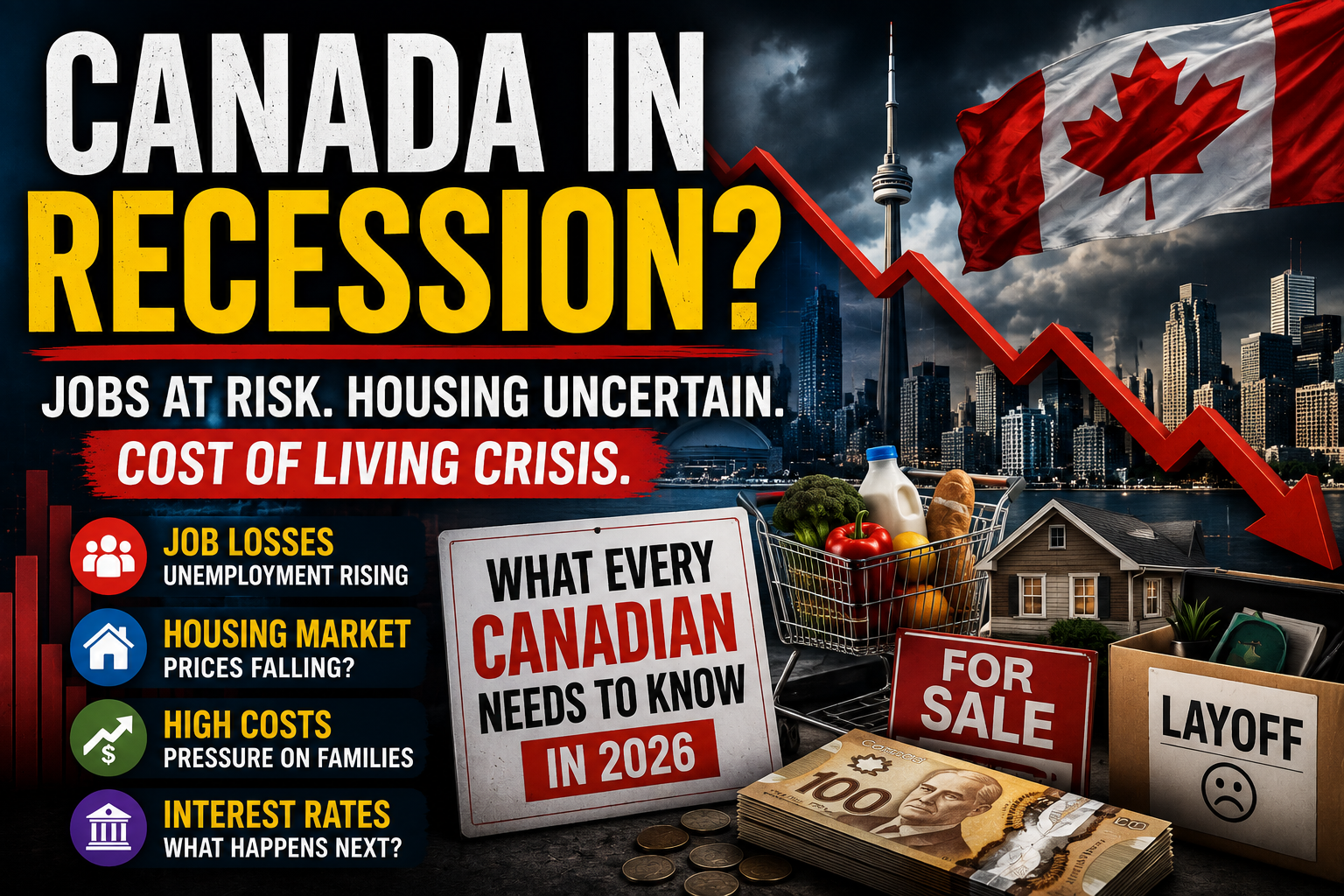
Is Canada Entering a New Economic Crisis?
For months, economists have warned that Canada’s economy was slowing down. Now, many experts believe the country has officially entered a recession after consecutive quarters of weak economic growth, declining consumer spending, rising unemployment, and growing pressure on households already struggling with high living costs.
For millions of Canadians, the word “recession” brings back memories of layoffs, business closures, housing market uncertainty, and financial stress. But what does a recession actually mean in 2026, and how could it affect workers, homeowners, renters, immigrants, international students, and businesses across the country?
The answer could impact nearly every Canadian household.
Why Economists Say Canada Is Sliding Into Recession
A technical recession typically occurs when an economy experiences two consecutive quarters of negative economic growth.
Several warning signs have emerged throughout 2025 and into 2026:
- Rising unemployment rates
- Slower consumer spending
- Weak business investment
- Increased household debt
- Falling housing activity
- Slowing population-driven economic growth
- Higher insolvency filings
While Canada’s population continues to grow, economic growth per person has weakened significantly.
Many families report feeling poorer despite continuing to work full-time.
The Cost-of-Living Crisis Is Still Hurting Canadians
One of the biggest factors contributing to economic weakness is affordability.
Across Canada, households continue facing pressure from:
Housing Costs
Average rents remain near record highs in many cities including:
- Toronto
- Vancouver
- Calgary
- Ottawa
- Halifax
Many families now spend more than 30% of their income on housing.
Grocery Prices
Food prices remain significantly higher than pre-pandemic levels.
Staples such as:
- Meat
- Dairy products
- Fresh produce
- Bread
- Cooking oils
continue putting pressure on household budgets.
Higher Debt Payments
Millions of Canadians renewed mortgages at higher interest rates over the past two years.
As a result, monthly payments increased dramatically for many homeowners.
Some households are paying hundreds or even thousands of dollars more each month than they were just a few years ago.
Unemployment Is Beginning to Rise
A recession often affects employment first.
Several industries have already started slowing hiring, including:
| Industry | Risk Level |
|---|---|
| Construction | High |
| Real Estate | High |
| Retail | Medium |
| Manufacturing | High |
| Technology | Medium |
| Hospitality | Medium |
| Government | Low |
Companies facing lower consumer demand may reduce hiring or postpone expansion plans.
Workers in cyclical industries often feel the impact first.
What a Recession Could Mean for Homeowners
For homeowners, the situation is complicated.
On one hand, slower economic growth may encourage the Bank of Canada to reduce interest rates.
Lower rates could eventually reduce borrowing costs and provide relief for mortgage holders.
However, recession risks may also lead to:
- Lower home values
- Slower sales activity
- Increased financial stress
- Reduced household wealth
Many economists expect housing markets to remain highly regional throughout 2026.
Could Interest Rates Fall Further?
One of the most closely watched questions is whether the Bank of Canada will continue lowering interest rates.
Historically, central banks often cut rates during economic downturns to stimulate growth.
Potential benefits include:
- Lower mortgage rates
- Cheaper business borrowing
- Increased consumer spending
- Stronger housing demand
However, lower rates do not automatically solve affordability challenges.
Many Canadians remain heavily indebted and cautious about spending.
How a Recession Could Affect Immigration
Immigration remains a major driver of Canada’s economy.
But economic weakness often creates debate about future immigration levels.
Some experts believe slower growth could lead governments to:
- Adjust immigration targets
- Focus on labour shortages
- Prioritize skilled workers
- Review temporary resident programs
At the same time, Canada continues facing long-term labour shortages caused by an aging population.
As a result, immigration is expected to remain an important part of Canada’s economic strategy.
What International Students Need to Know
International students could face several challenges during an economic slowdown.
Potential Concerns
- Increased competition for jobs
- Slower hiring
- More difficult housing markets
- Reduced work opportunities
Students may need to prepare for a more competitive labour market while managing rising living expenses.
Businesses Are Feeling the Pressure
Small businesses across Canada report increasing challenges.
Many face:
- Higher wages
- Increased rent
- Rising insurance costs
- Weak consumer demand
- Expensive financing
Business confidence surveys show growing concern about future economic conditions.
Some companies have already delayed expansion plans.
Others are focusing on cost reductions and efficiency improvements.
Which Provinces Could Be Hit Hardest?
Not all provinces experience recessions equally.
Provinces Facing Greater Risks
Ontario
Ontario’s economy depends heavily on:
- Manufacturing
- Real estate
- Consumer spending
These sectors can be vulnerable during downturns.
British Columbia
High housing costs and slower construction activity could affect economic growth.
Alberta
Energy prices continue playing a major role in Alberta’s economic performance.
Atlantic Canada
Smaller economies may feel slower growth differently depending on local industries.
Could Canada Avoid a Deep Recession?
Not all economists believe Canada is headed toward a severe downturn.
Several factors may provide support:
Strong Population Growth
Canada continues welcoming newcomers who contribute to economic activity.
Lower Interest Rates
Future rate cuts could stimulate spending and investment.
Labour Market Strength
Despite recent weakness, employment levels remain relatively strong by historical standards.
Government Spending
Infrastructure projects and public investments may help support growth.
What Canadians Should Do Right Now
Economic uncertainty does not necessarily mean panic.
Financial experts often recommend:
Build Emergency Savings
Aim to keep several months of expenses available if possible.
Reduce High-Interest Debt
Paying down expensive debt can improve financial flexibility.
Review Monthly Expenses
Identify opportunities to reduce unnecessary spending.
Improve Job Security
Investing in skills and professional development can strengthen employment prospects.
Avoid Major Financial Risks
During uncertain periods, cautious financial planning becomes more important.
Final Thoughts
Canada’s economy is facing growing challenges in 2026.
Whether the country experiences a mild recession or a deeper downturn remains uncertain, but warning signs have become increasingly difficult to ignore.
Rising unemployment, affordability pressures, weak consumer spending, and slowing economic growth are creating concern among economists, businesses, and households alike.
For workers, homeowners, renters, immigrants, and students, staying informed and preparing financially may be the best strategy during this period of uncertainty.
The coming months will likely determine whether Canada experiences a short-lived slowdown or a more prolonged economic downturn.
One thing is certain: millions of Canadians are watching closely.

Tyler Bernick is a content writer covering Canadian settlement updates, scam alerts, and consumer rights. He aims to simplify complex legal topics and provide clear, reliable information to help Canadians make informed decisions.