
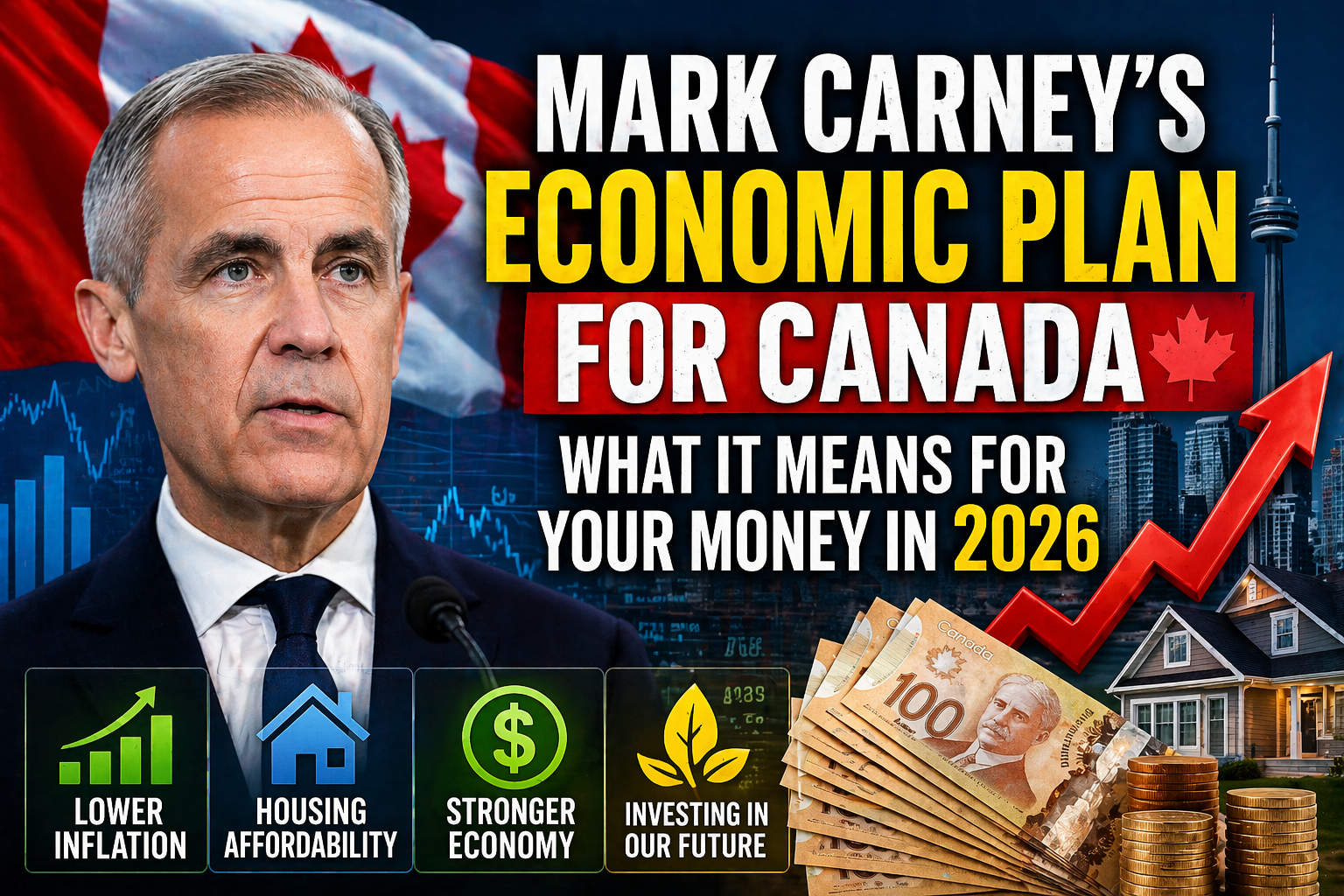
With inflation, housing costs, and interest rates still shaping daily life, more Canadians are paying attention to the ideas of Mark Carney.
As a former Governor of both the Bank of Canada and the Bank of England, Carney is seen as one of the most influential economic voices globally. His ideas about how Canada should handle inflation, housing, climate policy, and economic growth are gaining traction in 2026.
But the real question is:
What does Mark Carney’s economic thinking actually mean for your money?
This guide breaks it down in simple terms — so you understand how it could affect your income, expenses, savings, and future in Canada.
The Core Idea Behind Mark Carney’s Economic Vision
Carney’s economic philosophy focuses on one big goal:
Building a stable, sustainable, and inclusive economy
That includes:
- Lower and stable inflation
- Long-term economic growth
- Stronger financial systems
- Transition to green energy
Simple Breakdown
Instead of short-term fixes, Carney supports:
Long-term planning
Smarter government spending
Investment in future industries
Translation for you:
Less economic shocks — but slower, more controlled changes
Inflation: Will Prices Finally Come Down?
One of the biggest concerns in Canada right now is inflation.
Carney’s Approach to Inflation
Carney supports:
- Strong central bank independence
- Controlled interest rate policies
- Avoiding excessive government spending
What this means:
Inflation may stabilize
Prices may stop rising as fast
But prices may NOT drop significantly
Real Impact on You
- Groceries may stop increasing rapidly
- Rent may stabilize (not crash)
- Everyday costs remain high but predictable
Key takeaway:
Life may stop getting more expensive quickly — but it won’t suddenly become cheap
Housing Crisis: Will Home Prices Drop?
Canada’s housing crisis is one of the biggest economic challenges.
Carney’s View on Housing
Carney focuses on:
- Increasing housing supply
- Long-term infrastructure investment
- Sustainable urban development
What he does NOT support:
Quick market crashes
Artificial price manipulation
What This Means for You
Buyers:
- Prices may stabilize
- Slight correction possible
- Still competitive market
Renters:
- Rent increases may slow
- But affordability remains a challenge
Key takeaway:
No housing crash — but gradual improvement over time
Taxes: Will You Pay More or Less?
Tax policy is always a major concern.
Carney’s Likely Direction
While not directly setting tax policy, his influence suggests:
- More targeted taxation
- Focus on fairness
- Possible higher taxes on wealth/corporations
What It Means for You
Middle-income Canadians:
Likely minimal change
High-income earners:
Possible increased tax pressure
Businesses:
Incentives for innovation and green investment
Key takeaway:
Taxes may shift — but not dramatically for most people
Jobs & Income: Will Opportunities Improve?
Economic policy directly affects jobs.
Carney’s Focus Areas
- Green energy jobs
- Technology and innovation
- Infrastructure development
What This Means
More jobs in future industries
Growth in skilled sectors
Traditional industries may slow
Key takeaway:
More opportunity — but in different industries
Green Economy: Why It Matters for Your Finances
Carney is a global leader in climate finance.
His Strategy
- Invest in clean energy
- Transition away from fossil fuels
- Promote sustainable business
Real Impact
Short term:
- Energy costs may fluctuate
Long term:
Lower energy costs
More job opportunities
Stable economy
Key takeaway:
Short-term adjustment, long-term financial benefit
Cost of Living in Canada (Reality Check)
Let’s be honest — cost of living is still high.
What Carney’s Approach May Do
- Slow down price increases
- Improve economic stability
- Reduce extreme fluctuations
But:
It won’t instantly fix affordability
What You Should Expect
- Stable inflation
- Gradual improvement
- Continued pressure in big cities
Risks & Criticism of Carney’s Approach
No economic plan is perfect.
Critics Say:
- Changes may be too slow
- Housing crisis needs faster action
- Green transition may increase short-term costs
These concerns are valid — and part of the ongoing debate.
What Could Change in 2026 and Beyond
If Carney’s ideas influence policy:
Expect:
Stable inflation
Gradual housing improvements
Shift toward green economy
Long-term economic planning
But not:
Quick fixes
Instant affordability
What You Should Do Now (Smart Strategy)
Regardless of policy, you should:
Manage your finances
- Budget carefully
- Track expenses
Invest in skills
- Focus on future industries
- Upgrade education
Plan long-term
- Save consistently
- Avoid short-term panic decisions
This is how you stay ahead.
Final Thoughts
As Canada navigates a complex economic landscape, the ideas associated with Mark Carney point toward a future built on stability, resilience, and long-term growth. While these changes won’t deliver instant relief, they aim to create a more predictable environment for households and businesses alike. For everyday Canadians, the key is to stay informed, adapt early, and make smart financial decisions—because in 2026 and beyond, those who understand the direction of the economy will be in the strongest position to benefit from it.
Stay informed, plan your finances, and adapt early — because economic changes in 2026 will affect everyone in Canada.

Tyler Bernick is a content writer covering Canadian settlement updates, scam alerts, and consumer rights. He aims to simplify complex legal topics and provide clear, reliable information to help Canadians make informed decisions.