
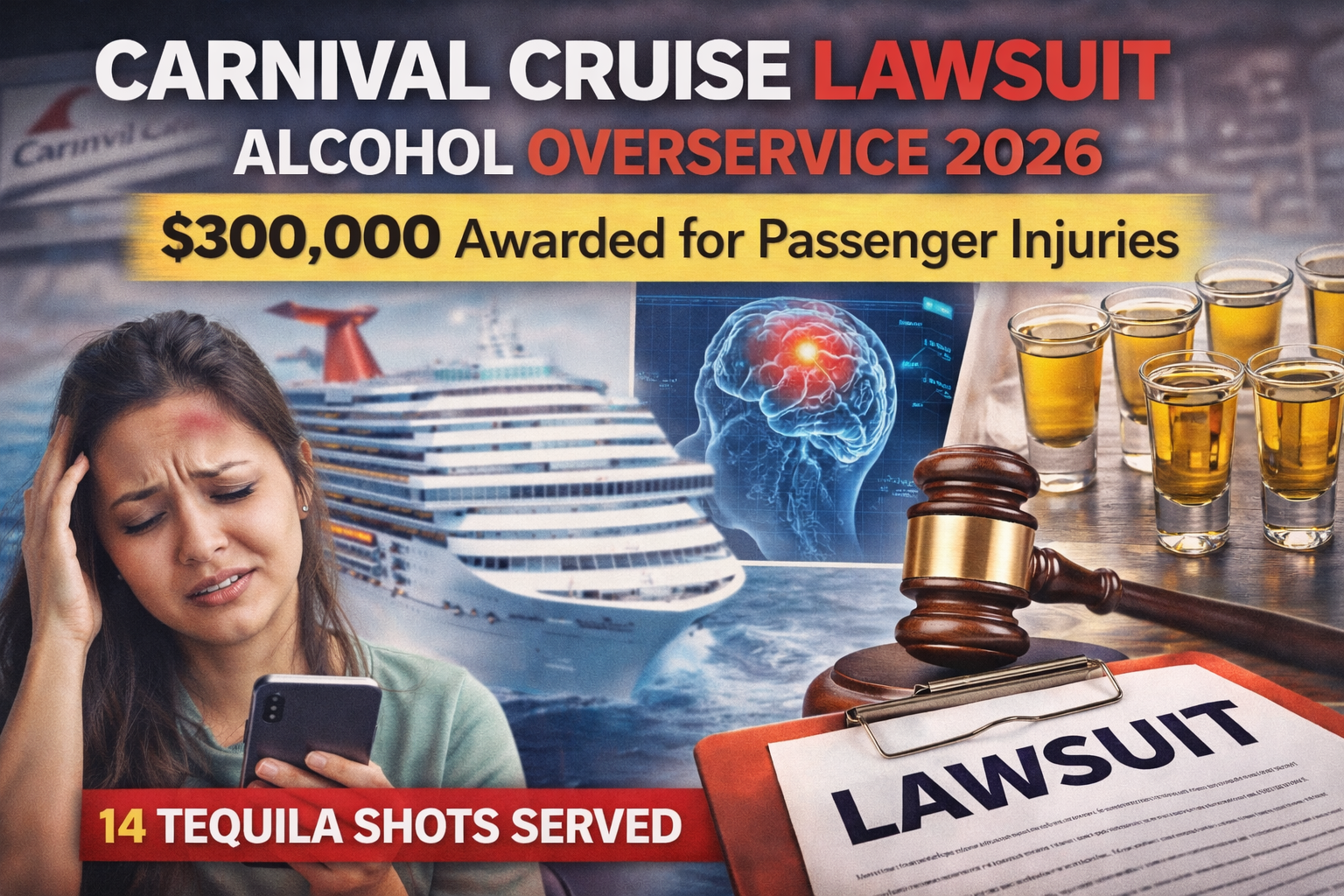
A major legal case involving Carnival Cruise Line is drawing attention after a Miami jury awarded $300,000 in damages to a passenger injured after being overserved alcohol onboard. The case is significant not just because of the payout, but because successful overservice lawsuits against cruise lines are rare — and this verdict could change how alcohol is served at sea.
What happened on the Carnival cruise?
The case centers on Diana Sanders, a 45-year-old nurse from California, who was a passenger aboard the Carnival Radiance in January 2024. According to court findings:
- She was served at least 14 tequila shots
- The drinks were consumed over approximately 8.5 hours
- The cruise included an all-inclusive drink package
Later that night, Sanders suffered a serious fall in a restricted area of the ship. The reported injuries included a concussion, severe headaches, back and tailbone injuries, and a possible traumatic brain injury.
Miami jury awards $300,000
A federal jury in Miami found Carnival Cruise Line 60% responsible for the incident, with the remaining 40% of fault assigned to the passenger — a split known as comparative negligence.
The jury concluded that the cruise line had a duty to monitor and manage alcohol consumption, that staff should have identified visible intoxication, and that preventive action should have been taken before the fall occurred.
The final award of $300,000 exceeded the original $250,000 claim, making the outcome even more notable.
The timeline that decided the case
| Time | Event |
|---|---|
| 2:58 PM – 11:37 PM | At least 14 tequila shots served across ship bars |
| ~11:45 PM – 12:20 AM | Fall occurs in a crew-only restricted area |
| Following days | Concussion, back and tailbone injuries documented |
| 2026 | Miami federal jury returns $300,000 verdict, 60/40 fault split |
Because every drink on a cruise ship is logged to the passenger’s onboard account, the service record gave the jury an unusually precise picture — evidence that rarely exists in bar or restaurant overservice cases on land.
Alcohol overservice on cruise ships
The case highlights a growing concern around alcohol overservice under unlimited drink packages. Carnival’s package currently allows up to 15 alcoholic drinks per 24 hours. The policy is legal, but critics argue it encourages excessive consumption while giving crews little incentive to cut anyone off.
Legal observers believe the verdict could push cruise lines toward stricter drink limits, better staff training on recognizing intoxication, and stronger monitoring of visibly impaired passengers.
Why this case is important
Overservice lawsuits in the cruise industry are extremely rare, with most cases settling privately before trial. This verdict stands out because it went to trial, the jury ruled against a major cruise company, and it established shared responsibility rather than placing all fault on the drinker.
That combination could influence future lawsuits and push the industry to improve safety measures — the same accountability dynamic behind Canadian consumer cases like the DoorDash hidden fees class action, where documented company records became the core evidence.
Carnival’s response
Carnival has disputed the verdict and plans to request a new trial and file an appeal. The company argues the passenger did not clearly show signs of intoxication, that there was insufficient evidence identifying specific staff members responsible, and that it should not bear majority liability. The appeals process could continue for months or years, and the award is not final until appeals conclude.
Legal perspective: duty of care
The key legal issue is duty of care. Cruise lines are expected to ensure passenger safety, monitor alcohol consumption they profit from, and intervene when necessary. The jury’s decision suggests that failing to act — even when alcohol is voluntarily consumed — can result in liability for the company serving it.
For Canadian readers, the principle is familiar: Canadian courts have long recognized commercial host liability, meaning bars and venues here can also be held partly responsible for harm to patrons they overserve. A cruise verdict like this one reinforces that direction.
Could this lead to more lawsuits?
Very possibly. Passengers injured after excessive alcohol service may now feel more confident pursuing legal action, and the drink-logging systems on modern ships mean the evidence usually exists. The case raises lasting questions about responsibility between passenger and provider, the limits of alcohol service policies, and accountability in all-inclusive environments.
Final takeaway
The Carnival Cruise $300K lawsuit is more than a compensation case — it is a test of corporate responsibility when companies profit from alcohol service in controlled environments. While passengers are expected to act responsibly, service providers can be held accountable when limits are exceeded and nobody intervenes.
As the appeal moves forward, the outcome could reshape drink-package policies across the cruise industry. For Canadian class actions and settlements currently paying out, see our guide to new settlement payments Canadians can claim in 2026.

Tyler Bernick is a content writer covering Canadian settlement updates, scam alerts, and consumer rights. He aims to simplify complex legal topics and provide clear, reliable information to help Canadians make informed decisions.