
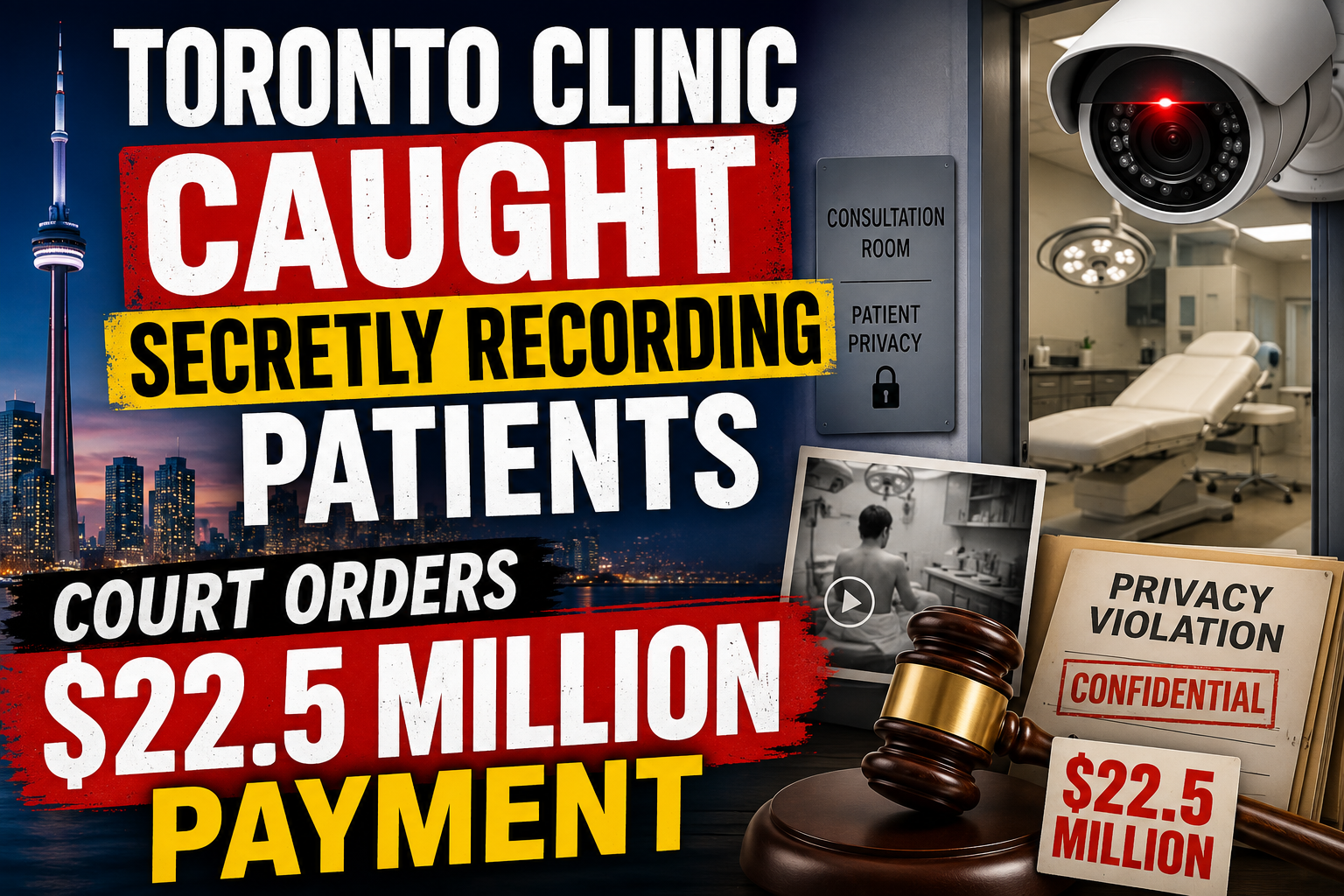
Toronto Cosmetic Surgery Clinic Ordered to Pay $22.5 Million After Patients Were Secretly Recorded
A Toronto cosmetic surgery clinic has been ordered to pay $22.5 million after an Ontario court found that thousands of patients were secretly recorded in private medical spaces without their knowledge or meaningful consent.
The case involves the Toronto Cosmetic Surgery Institute, operated by plastic surgeon Dr. Martin Jugenburg, widely known online as “Dr. 6ix.” According to court findings, patients were recorded in highly sensitive medical areas, including consultation rooms, treatment rooms, operating spaces, and recovery areas.
For many Canadians, the ruling has raised serious questions about privacy rights in medical settings. Unlike cameras placed in public hallways or building entrances, these recordings occurred in locations where patients expected the highest level of confidentiality and privacy.
The court ultimately awarded $21.5 million in aggregate damages plus $1 million in punitive damages, bringing the total judgment to $22.5 million.
What Happened at the Toronto Cosmetic Surgery Institute?
The lawsuit centered around surveillance cameras installed throughout the Toronto Cosmetic Surgery Institute, located at the Fairmont Royal York Hotel in downtown Toronto.
Court documents revealed that approximately 24 cameras were operating throughout the clinic. The cameras were reportedly installed in areas that included:
| Areas Reportedly Recorded |
|---|
| Consultation rooms |
| Treatment rooms |
| Procedure rooms |
| Operating rooms |
| Pre-operative areas |
| Post-operative recovery spaces |
| Additional patient-care areas |
Some cameras reportedly recorded video only, while others captured both video and audio.
According to court findings, footage could be stored digitally and accessed remotely using personal electronic devices.
The court determined that patients were not provided with adequate notice and did not give meaningful consent to these recordings.
Why the Privacy Concerns Were So Serious
Many people may wonder why this case resulted in such a large award.
The answer lies in the nature of medical privacy.
Patients visiting a cosmetic surgery clinic often discuss:
- Personal health information
- Medical history
- Body insecurities
- Surgical procedures
- Recovery concerns
- Financial arrangements for treatment
In many situations, patients may also be partially undressed, preparing for surgery, or recovering from procedures.
These circumstances create one of the strongest expectations of privacy recognized under Canadian law.
Unlike retail stores, restaurants, or public spaces, medical clinics are environments where individuals are entitled to expect confidentiality and dignity.
The court recognized that secretly creating recordings in these circumstances represented a serious invasion of privacy.
Understanding the $22.5 Million Judgment
The Ontario court awarded:
| Damages Category | Amount |
|---|---|
| Aggregate Damages | $21.5 Million |
| Punitive Damages | $1 Million |
| Total Award | $22.5 Million |
The aggregate damages were designed to compensate affected patients.
The court grouped patients into different categories based on the level of privacy intrusion they experienced.
Surgical Patients
Patients who underwent surgical procedures were generally considered to have experienced a more significant privacy violation due to the highly sensitive nature of their treatment.
Non-Surgical Patients
Patients who received injectable treatments or other non-surgical services were also included but generally received a different assessment of damages.
Court records estimated that approximately:
- 4,000 surgical patients
- 3,000 non-surgical patients
may have been affected.
The additional $1 million in punitive damages was intended to punish the conduct and send a clear message that privacy violations in medical settings will not be tolerated.
Court Judgment vs. Settlement
Many online articles refer to this matter as a “settlement.”
However, there is an important distinction.
Settlement
A settlement occurs when parties voluntarily agree to resolve a dispute, often without admitting wrongdoing.
Court Judgment
A court judgment occurs when a judge hears evidence, makes legal findings, and orders a specific outcome.
In this case, the $22.5 million award resulted from a court judgment rather than a private negotiated settlement.
This distinction is important because it reflects the court’s direct assessment of the conduct involved.
How the Case Came to Public Attention
The controversy first gained widespread attention after investigative reporting by CBC Marketplace in 2018.
The reports raised questions about the use of surveillance cameras inside patient treatment areas.
Following public attention, several organizations became involved:
Ontario Information and Privacy Commissioner
The privacy commissioner investigated the clinic’s camera practices and concluded that the recordings violated Ontario health privacy laws.
College of Physicians and Surgeons of Ontario
Ontario’s medical regulator also reviewed the situation.
Dr. Jugenburg was subsequently suspended and required to complete remediation related to professionalism, informed consent, and communication standards.
These investigations contributed to the legal proceedings that eventually resulted in the $22.5 million court award.
What Laws Were Involved?
One of the key legal concepts in this case is known as Intrusion Upon Seclusion.
This privacy tort allows individuals to seek damages when someone intentionally invades their private affairs in a way that would be highly offensive to a reasonable person.
The court found that the act of recording itself constituted the privacy violation.
Importantly, the court did not require evidence that the footage had been publicly distributed or sold.
Instead, the unauthorized recording of patients in highly private circumstances was sufficient to support substantial damages.
The case also involved concerns under Ontario’s health privacy legislation, including PHIPA (Personal Health Information Protection Act).
Why This Case Matters for Canadian Patients
The ruling serves as an important reminder that patients have rights when it comes to privacy.
Many people assume that healthcare facilities automatically follow strict privacy rules.
While most clinics do, this case demonstrates why patients should remain informed.
Patients may wish to ask healthcare providers questions such as:
- Are cameras used in this clinic?
- Which areas are monitored?
- Do cameras record audio?
- Who can access recordings?
- How long is footage stored?
- Is recording optional?
- How is patient consent obtained?
These questions are entirely reasonable, particularly when sensitive medical procedures are involved.
Lessons for Medical Clinics
The decision also sends a powerful message to healthcare providers.
Security concerns may justify surveillance in some public-facing areas such as:
- Entrances
- Hallways
- Reception areas
However, treatment rooms and patient-care spaces present very different privacy considerations.
Clinics must ensure that:
Clear Notice Is Provided
Patients should be informed in straightforward language if recording is taking place.
Consent Is Meaningful
Consent must be informed, voluntary, and specific.
Privacy Expectations Are Respected
Healthcare providers should recognize that patient-care spaces require heightened privacy protections.
The Growing Role of Technology in Healthcare
Modern healthcare increasingly relies on technology.
Electronic medical records, telemedicine, digital imaging, and remote monitoring systems all offer significant benefits.
However, this case demonstrates that technological convenience must never override patient privacy.
The court’s ruling highlights the importance of balancing innovation with ethical responsibilities.
As healthcare facilities adopt new technologies, transparency and consent become even more important.
Social Media and Cosmetic Surgery
Another reason this case attracted attention is the close relationship between cosmetic surgery and social media marketing.
Many cosmetic clinics actively promote:
- Before-and-after photos
- Procedure videos
- Patient testimonials
- Social media content
While such marketing can be legitimate, it requires clear and informed patient consent.
Patients should always understand:
- What content is being recorded
- How it will be used
- Who will see it
- Whether participation is optional
The court’s decision reinforces the principle that patients should never feel pressured into allowing recordings or promotional use of their medical experiences.
The Importance of Trust
Healthcare relationships are built on trust.
Patients routinely share personal information that they may not discuss with friends, coworkers, or even family members.
They trust medical professionals to:
- Protect confidential information
- Respect personal boundaries
- Act in their best interests
When that trust is compromised, the consequences can be significant.
The court recognized that privacy is not simply an administrative requirement.
It is a fundamental component of ethical healthcare.
Could Affected Patients Receive Compensation?
The case was certified as a class action.
That means the lawsuit was brought on behalf of a group of affected patients rather than a single individual.
The exact process for compensation distribution may depend on ongoing legal developments, including:
- Appeals
- Administrative procedures
- Claims processes
- Legal costs
Individuals who believe they may be affected should seek information from official class-action sources and avoid relying solely on social media discussions.
Broader Implications for Privacy in Canada
This case extends beyond one clinic.
It serves as a broader reminder that privacy rights remain critically important in an increasingly digital world.
Whether cameras are used in healthcare, workplaces, educational institutions, or businesses, context matters.
A camera in a public hallway is very different from a camera in a private treatment room.
The greater the expectation of privacy, the greater the responsibility to obtain meaningful consent.
The Ontario court’s decision reinforces this principle in a powerful way.
Final Thoughts
The Toronto cosmetic surgery clinic case has become one of Canada’s most significant medical privacy rulings in recent years.
The court’s $22.5 million judgment sends a clear message:
Patients have the right to privacy, dignity, and informed consent.
Healthcare providers must ensure that surveillance practices respect those rights and comply with privacy laws.
For patients, the case highlights the importance of asking questions and understanding how personal information is collected and used.
For clinics, it demonstrates that privacy compliance is not optional—it is an essential part of ethical healthcare.
As technology continues to evolve, maintaining trust between patients and healthcare providers will remain one of the most important responsibilities in the medical profession.

Tyler Bernick is a content writer covering Canadian settlement updates, scam alerts, and consumer rights. He aims to simplify complex legal topics and provide clear, reliable information to help Canadians make informed decisions.
Discover more from Settlement Alerts
Subscribe to get the latest posts sent to your email.