
If you gave birth in a British Columbia hospital at any point since 1980 and a social worker turned up before you were discharged, there is a chance a Birth Alert was sent about you before your baby was born. Many people were never told. Some still don’t know.
A proposed $66 million settlement with the Province of B.C. would pay at least $2,000 to each person with an approved claim, with an extra amount for Indigenous class members. You can file a claim right now, even though the court has not approved the deal yet.
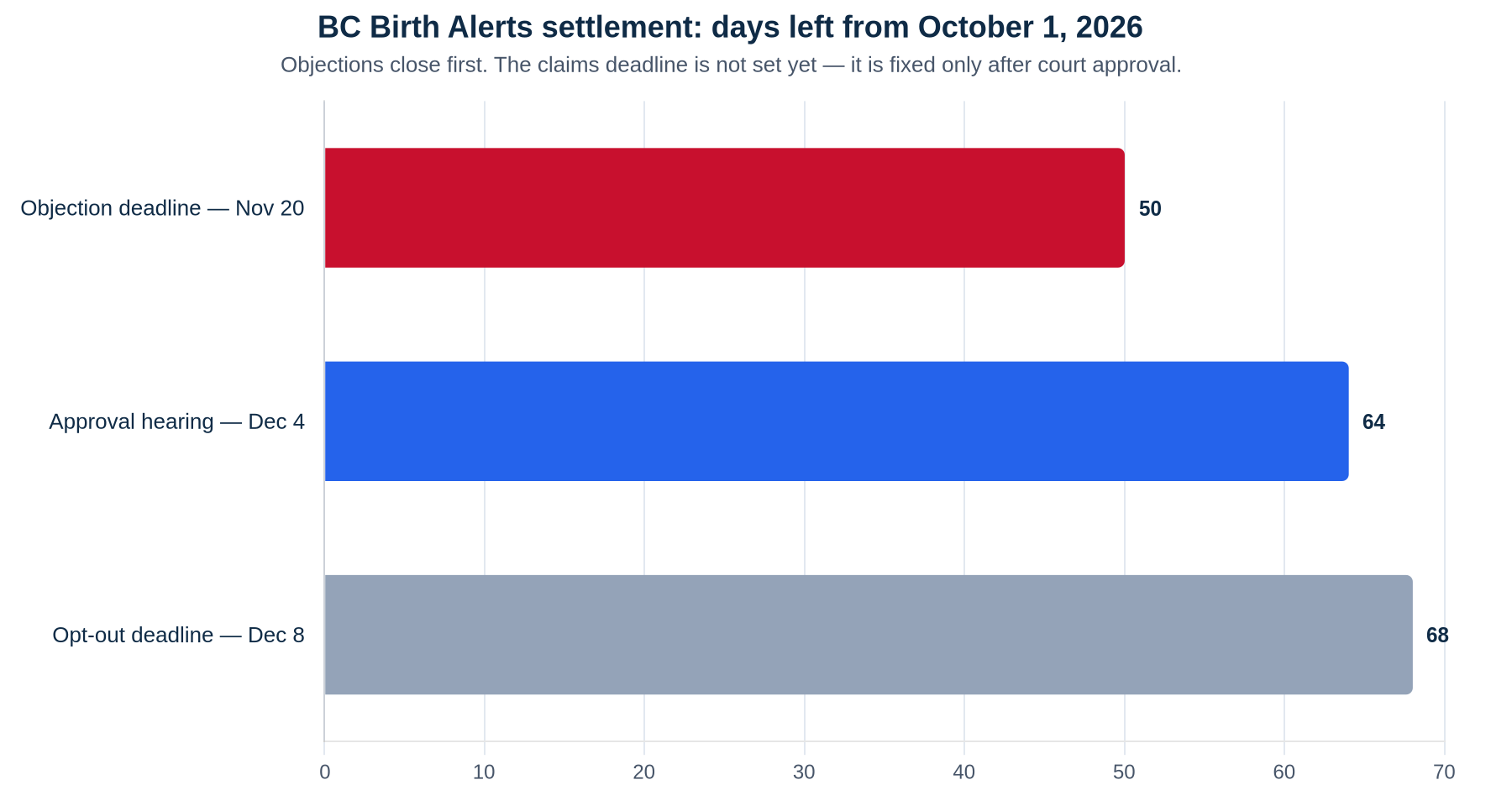
Nothing gets paid until a judge signs off. The hearing is December 4, 2026. If you want to object, the deadline is November 20. If you want out, the deadline is December 8.
What a Birth Alert actually was
A Birth Alert was a message sent by a child welfare worker from the Ministry of Children and Family Development (MCFD), or from a delegated Indigenous agency, to a hospital before a baby was born. It said or implied that a specific person was pregnant and that the child might need protection after birth.
The hospital was then expected to notify child welfare when that person arrived to give birth. Workers commonly came to the hospital before the parent or baby went home. The pregnant person usually wasn’t told the alert existed.
B.C. ended the practice in 2019. The class action, Zeleniski v. His Majesty the King in right of British Columbia, was filed in 2021. It argues that Birth Alerts disclosed sensitive personal information without consent, infringed the rights to liberty and security, and, for Indigenous parents, violated equality rights. The settlement backgrounder cites data from B.C.’s Representative for Children and Youth showing 58 per cent of parents subject to Birth Alerts in 2018 were Indigenous.
The Province does not admit wrongdoing. The settlement is a compromise.
Who is in the class — and who isn’t
Who it covers: anyone who was the subject of a Birth Alert in British Columbia between May 31, 1980 and May 8, 2026.
Who it doesn’t: people who, at the time of the alert, were both under 19 and themselves in the care or custody of the Province.
Estates can’t claim. Under the proposed distribution protocol, claims filed by the estate or representative of a class member who has died are not eligible for compensation. That is a hard rule in the document, not a processing preference.
Two limits matter. The settlement covers the alert itself, not anything child welfare did after the birth. And not every hospital–MCFD contact counts: if hospital staff called the ministry, that is not a Birth Alert here. The message has to have gone from a child welfare worker to the hospital, before the birth.
How you prove it when you were never told
This is the part people worry about, and the claim process is built around it.
If you received a direct notice
Some people are being contacted directly because records suggest an alert was issued about them. If you are one of them and you submit a valid claim form, the protocol says your claim is approved once the administrator verifies your identity.
If you didn’t
You can still claim. The claim form asks you to authorize class counsel to request your hospital records from nine months before to three months after each relevant birth. Counsel reviews those records for evidence of an alert, such as a worker’s notes about contacting hospital staff. You do not have to dig up your own medical records before filing.
You will need government-issued ID, the approximate birth dates, and the hospitals involved. If you are claiming as an Indigenous class member, you will also need a document verifying that.
How much will you get?
At least $2,000 if the settlement is approved and your claim is accepted. Beyond that, nobody knows yet, and be sceptical of any site that gives you a firm per-person number.
Here is the mechanism. The $66 million is the gross fund. Before individual payments are worked out, it pays court-approved legal fees, notice and administration costs, and a collective fund that goes to organizations supporting families before and after birth. What’s left is split among approved claims. Everyone who is not Indigenous gets the same share. Every Indigenous class member gets the same, larger share. The extra amount has not been set.
So the more people who file, the closer each payment sits to the $2,000 floor. Fewer claims means more per person.
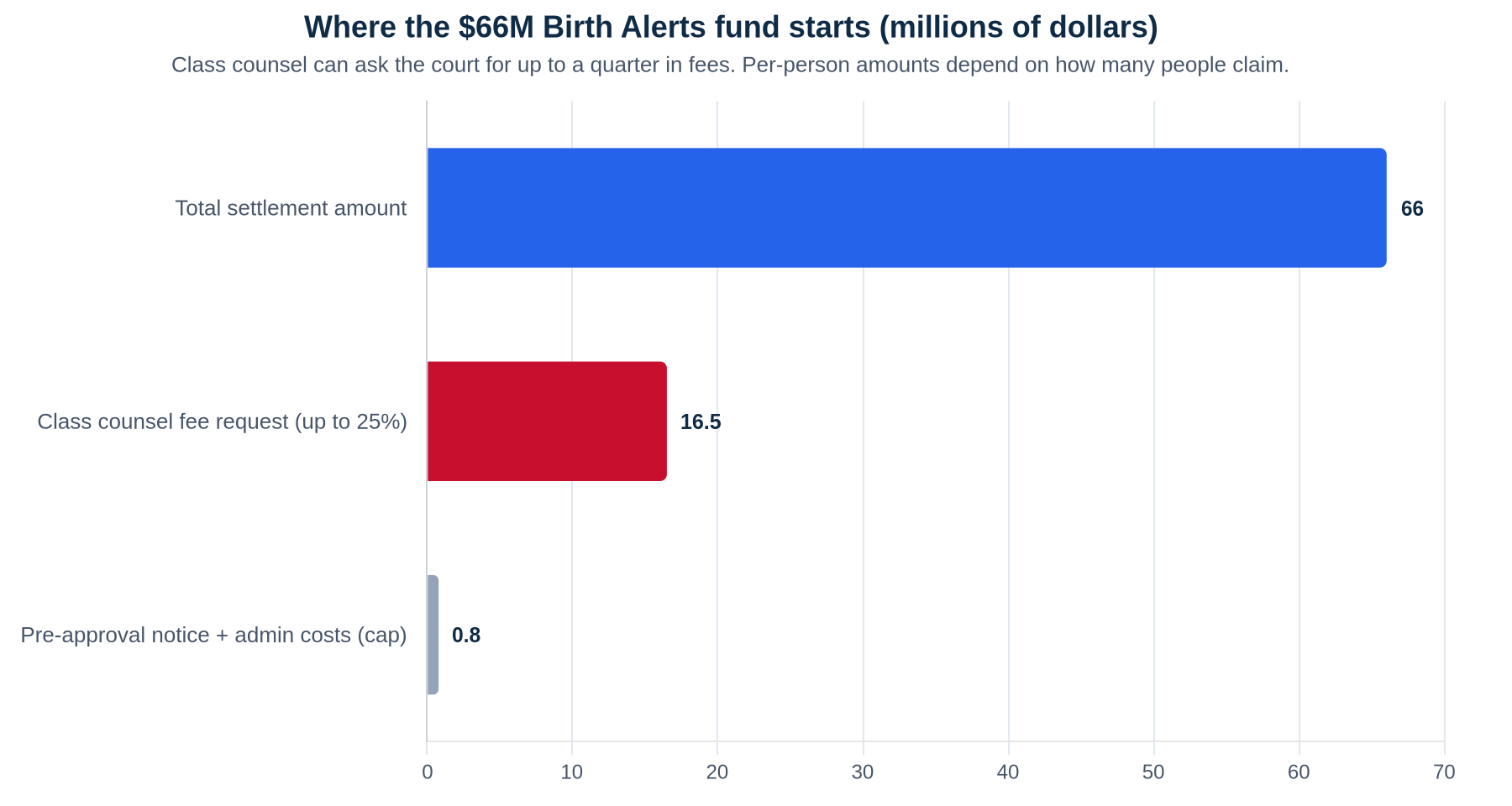
Legal fees: class counsel, CFM Lawyers, may ask for up to 25 per cent of the settlement — up to $16.5 million — plus disbursements and taxes. The judge decides the actual figure at the December 4 hearing, and you can object to it.
Timing: payments go out only after the claims period ends and every claim has been assessed. The claims deadline is not set yet. The protocol sets it at 12 months after the second publication of the claims notice, and that second notice phase only starts if the court approves the deal. Realistically, this is not money that arrives in 2026.
Families touched by child welfare in other provinces should check separately. The Manitoba Children’s Special Allowance settlement, for example, is a different deal with its own January 5 deadline.
Your four options
Stay in and file a claim. You get compensation if the deal is approved and your claim is accepted. You give up the right to sue the Province yourself over the released claims.
Object. Deadline: November 20, 2026. You stay in the settlement and can still claim, but the court hears your concerns about the deal, the distribution plan or the fees. You can ask to speak at the hearing.
Opt out. Deadline: December 8, 2026. You get nothing from this settlement and keep the right to sue on your own, at your own cost. Talk to a lawyer before choosing this.
Do nothing. You are still bound by the settlement if it’s approved, but you get no money unless you file a claim.
What to do this week
Decide whether this could be you. If child welfare was involved around a birth in a B.C. hospital, especially if workers appeared before discharge, it may be worth filing. You don’t need to be certain. The records review exists for exactly that situation.
File early. Claims are open now on the official Birth Alerts BC claims page. Hospital records take time to request, and filing now puts your claim in the queue before approval.
Use the free Claims Helpers. Call 1-833-632-6557 or email ClaimsHelper-BABC@BirthAlertsBC.ca. They are not connected to MCFD, and they can mail you a paper form.
Don’t pay anyone to file for you. The claim process is free. Legal fees come out of the settlement fund, not your pocket. The protocol also bars third parties from filing on your behalf, so a stranger offering to “submit your Birth Alerts claim” for a fee is a red flag.
Watch for phishing. Any settlement that asks for ID and medical consent attracts copycats. Type BirthAlertsBC.ca into your browser yourself rather than clicking links in texts or social media messages. We’ve written before about how fake settlement scams work, and the same playbook applies here.
If this brings up hard memories, there is support. The B.C. Mental Health and Crisis Response line is 310-6789 (no area code), and the Hope for Wellness Help Line for Indigenous people is 1-855-242-3310.
Birth Alerts class actions in Manitoba, Saskatchewan, Ontario and Quebec are separate cases at different stages. This settlement covers B.C. only.
More open settlements
- In Care in Manitoba Between 2005 and 2019? The $445M CSA Settlement Closes January 5
- Two CAF Class Actions, One Already Closed — the Racism Claim Deadline Is October 15
- Quebec’s Opioid Settlement Splits $22.6M Equally — File Before November 30
- Government of Canada Account Breach Settlement
Figures and dates are as of October 1, 2026, from the Birth Alerts BC settlement website, the proposed settlement agreement and the August 14, 2026 distribution protocol. The settlement is not yet approved and terms can change at or after the December 4 hearing. This article is general information, not legal or financial advice. Confirm details on the official settlement website or with class counsel, CFM Lawyers (1-604-689-7555), before acting.

Tyler Bernick is a content writer covering Canadian settlement updates, scam alerts, and consumer rights. He aims to simplify complex legal topics and provide clear, reliable information to help Canadians make informed decisions.
Discover more from Settlement Alerts
Subscribe to get the latest posts sent to your email.